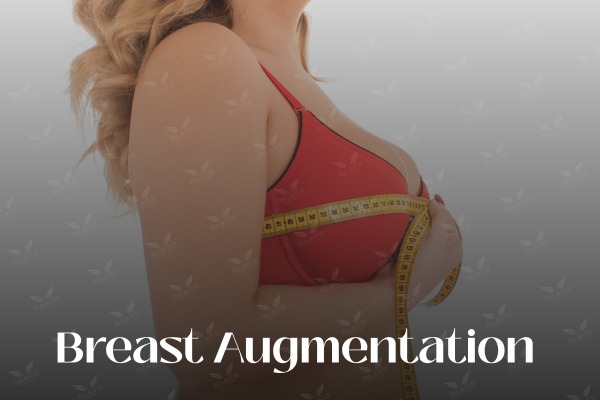
If you’re considering breast augmentation, you’re not alone. It’s one of the most common cosmetic procedures in the world, but it’s also a deeply personal journey. Every woman’s body and goals are unique. Understanding your options and what to expect before surgery is the key to making a choice you’ll feel confident and happy with. If you are considering breast enlargement surgery in Dubai, you have come to the right place.
Let’s walk through the main techniques, how we find the right implant size and placement for you, and why the surgeon you choose is the most important decision you’ll make.
1. What Are My Options? Implants, Fat, or a Combination
A. Silicone Implants
This is the classic approach and the most popular choice for a reason. During the procedure, a silicone gel implant is placed behind the breast tissue through a small, carefully placed incision. Today’s implants are incredible—they feel soft and natural but hold their shape beautifully. They come in a wide variety of sizes (measured in ccs), shapes (from traditional round to a more sloped “teardrop”), and profiles (how much they project forward).
Implants are a fantastic option if you’re looking for a clear, predictable increase in size and fullness. They are especially effective if you have less natural breast tissue to begin with, and the range of choices allows us to find a perfect match for your body’s proportions.
B. Fat Grafting (Using Your Own Fat)
This technique uses your body’s own tissue to enhance your breasts. We use gentle liposuction to borrow a little fat from another area (like the stomach, hips, or thighs), purify it, and then carefully inject it into the breasts.
The beauty of fat grafting is that it’s 100% you—there’s no foreign object involved. The results look and feel incredibly natural. It’s also a wonderful tool for subtle shaping and contouring, or for correcting small asymmetries. The main thing to know is that fat grafting typically creates a more modest change, often about a half to a full cup size per session. For a more dramatic difference, you might need a couple of sessions, as the final volume depends on how much of the transferred fat settles in and develops a new blood supply.
C. Hybrid Augmentation (The Best of Both Worlds)
This technique combines a smaller implant with fat grafting. Why? It allows us to get the reliable volume and projection of an implant while using your own fat to create soft, natural-looking transitions. It’s an ideal solution for very thin women, as the fat can add an extra layer of coverage over the implant, masking its edges and preventing rippling. We can also use it to artfully sculpt the cleavage area and the upper part of the breast for a truly customized result.
2. Why We Always Start with a Health Check: Ultrasound & Mammograms
Before we even consider surgery, my first priority is your health. That’s why a baseline breast screening is a non-negotiable first step. For younger women or those with dense breast tissue, we often use an ultrasound. For women over 40 (or younger, if there’s a strong family history), a mammogram is typically recommended.
These scans give us a clear picture of your breast tissue before we make any changes. They help us spot any existing issues that might need to be addressed first and make it easier to interpret any future scans you may have. Skipping this step to save time is never worth the risk.
3. Finding Your Perfect Fit: It’s More Than Just a Cup Size
There is no such thing as a “perfect” implant size—only the size that is perfect for *you*. Finding the right fit is a collaborative process that takes several key things into account:
First, we look at **your frame**, especially the width of your chest. The implant needs to sit naturally on your body, not look too wide or too narrow. We also consider the **thickness and elasticity of your skin and tissue**. Very thin skin might not conceal a large implant well, and tight skin can limit how much of an increase is safe and comfortable in one go.
Finally, we consider **your overall proportions**—your height, shoulders, and hips all play a role in creating a balanced, harmonious look. This is where you come in. Bringing photos of results you love (and those you don’t!) is incredibly helpful. It helps me understand your vision, and I can then guide you on what is realistic, safe, and will look beautiful on your body. It’s not about chasing a cup size; it’s about finding a 3D shape that feels like it belongs to you.
4. Where Does the Implant Go? Understanding Placement
We can place an implant in a few different positions, and each has its own benefits. There’s no single “best” way; it all depends on your anatomy and goals.
1. In Front of the Muscle (Subglandular): The implant sits directly behind the breast tissue. This can create a bolder, rounder look and often involves a slightly easier recovery. However, for very thin women, the edges of the implant might be more visible.
2. Behind the Muscle (Submuscular): The implant is placed mostly behind your pectoral chest muscle. This provides an extra layer of natural tissue over the top of the implant, which is great for creating a subtle, sloped appearance. It’s often the preferred choice for very slim patients, though it can mean a bit more discomfort in the first few days.
3. Dual Plane: This is a sophisticated technique where the top of the implant is tucked under the muscle, but the bottom half is allowed to sit behind the breast tissue. This gives the upper breast a smooth, natural contour while letting the lower part of the breast fall naturally, just like a real breast would. It’s especially useful for women with a little bit of sagging who don’t quite need a full lift.
The right placement for you is something we’ll decide on together during your consultation, after a thorough examination.
5. Choosing the Incision: Where Will the Scar Be?
The implant has to be inserted through a small incision, and we have a few options for where to place it:
In the Crease Under the Breast (Inframammary): This is the most popular choice worldwide. It gives the surgeon great control for creating the perfect pocket and, once healed, the scar is usually very well hidden in the natural fold of the breast.
Around the Areola (Periareolar): Here, the incision is made around the lower edge of the areola. The scar can blend beautifully with the natural change in skin color, but it isn’t the best option for women with very small areolas.
In the Armpit (Transaxillary): This approach leaves no scar on the breast itself. It’s a more technically demanding surgery, and if you ever need a revision down the line, you might need a new incision elsewhere.
We’ll discuss which approach makes the most sense for you, taking into account your anatomy, how you heal, and even your clothing preferences.
6. Choosing Your Surgeon: Why Experience Matters More Than Price
Breast enlargement is real surgery, not a spa treatment. The surgeon you choose will affect your results and your health for years to come. Their experience influences everything from your safety under anesthesia and the precision of the plan to the final symmetry and your long-term risk of complications.
As a surgeon, I believe in a process built on safety and personalization. That means a thorough evaluation from the very beginning, a plan that is 100% tailored to you, and an unwavering commitment to the highest safety standards in the operating room.
Bargain offers can be tempting, but they often come from cutting corners—on time, on the quality of the implants, on follow-up care, or on critical safety protocols. A complication or a result you’re unhappy with can end up costing you so much more, not just financially, but physically and emotionally.
It is worth spending time to seek out one of the best cosmetic surgeons of dubai. Experience has a price because it reflects years of dedicated training, sound judgment, and a track record of safe, beautiful outcomes. When it comes to your body, that’s not a place to compromise.
If you are ready to explore your options, the essential first step is a detailed, one-on-one consultation. It’s a chance for us to sit down together, discuss your goals, and create a safe, customized plan that feels right for you. More information can be found in dr mohan plasticsurgeon website.